
Start your nut butter business with a product you can make consistently and a clear place to sell it. A shop counter, a café shelf and a bakery customer need different packaging and daily routines. Choose your first sales channel, build the production process around it, then expand as repeat orders grow.
Choose how you will sell
Pick one main route for your launch. You can add others once production and sales settle into a routine.
Fresh from the counter
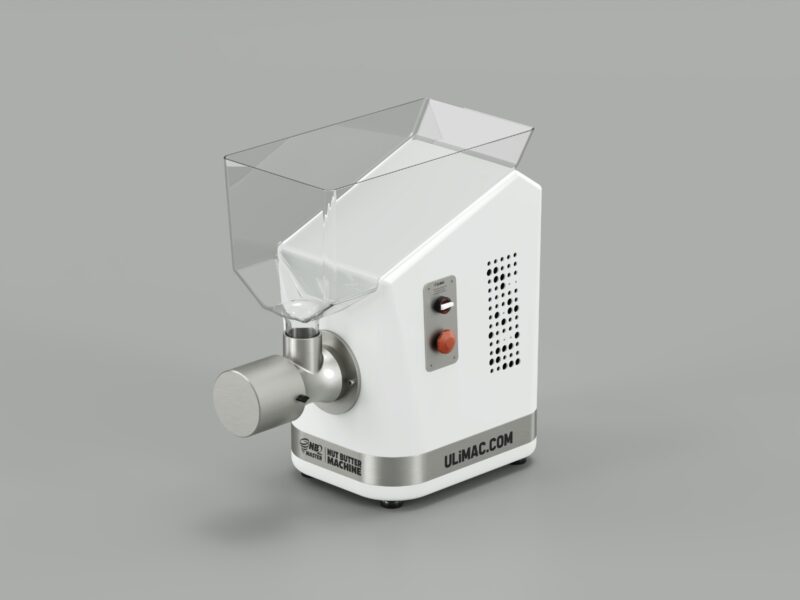
Customers fill a container in your shop. Plan the grinder position, weighing, allergen signs and daily cleaning. We recommend NB2 Master for retail counters and self-service, or Master X where three-phase electricity is not available.
Your own jars
Sell filled jars beside your existing products. Start with a small range and record how much sells between production days.
Retail and online
Supply labelled jars to stores or sell directly online. Include packing, delivery, retailer terms and returns in your plan.
Paste for professional kitchens
Supply tubs to bakeries, cafés and gelato makers. Agree on the nut, texture, pack size and delivery schedule, then keep each batch consistent.
Define your first product
Begin with one nut and a clear recipe. A pure roasted peanut butter gives you a simple starting point: peanuts, a chosen texture and a suitable container. Keep the same nut specification and roast for repeat batches.
For pastry customers, build the product around their application. A smooth pistachio paste can become an ingredient in creams, fillings and gelato. Our guide to making pistachio paste for gelato and pastry covers that workflow.
Set up the business before selling
In the EU, register your food establishment with the competent authority and complete any approvals required for your activity. Establish hygiene procedures based on HACCP principles. The framework is set out in Regulation (EC) No 852/2004.
In the United States, follow the licensing and permit requirements for your state, locality, product and premises. Home-based food rules vary by state. Complete FDA facility registration where applicable; exemptions include certain retail establishments and private residences. Use the FDA food-business guide to map the requirements for your operation.
Buy equipment for the work you have
A practical production station
Use a commercial grinder, suitable weighing scales, food-grade containers, jars or tubs, lids, labels and cleaning equipment. Provide clean work surfaces, handwashing facilities and ingredient storage. Add an oven, trays and cooling space if you roast on site.
Remove the slowest task
Add a dedicated roaster, cooling equipment, jar filler or label applicator when that task limits output. A separate mixer handles recipe additions. A second grinder can support another product or a dedicated allergen workflow.
Follow the product through the room: ingredients, preparation, grinding, filling, closing and finished stock. Keep incoming raw nuts separate from ready-to-eat products.
Match the grinder to your production
The NB2 produces approximately 75 kg of peanut butter per hour from prepared roasted peanuts. Plan filling, labelling and cleaning separately from grinding time.
NB2 Master →
For retail counters, self-service and continuous, intensive production, we recommend Master. Master X serves these applications where three-phase power is not available. Read our commercial nut butter grinder guide for the full comparison.
Make the roast repeatable
Starting with ready-roasted nuts reduces preparation work. When roasting yourself, establish a food-safe process and a flavour profile you can repeat. Record the nut weight, oven setting, tray depth and roasting time.
Cool the nuts in a clean area before grinding. Keep the texture setting consistent and record the finished batch weight. Mix additional ingredients separately using a written recipe.
Prepare labels and a storage plan
Build your label around the rules of the market where you sell. Include the product name, ingredients, net quantity, business details and required nutrition information. Apply the relevant date marking, storage instructions and batch identification.
Declare peanuts and the specific tree nuts used. In the EU, emphasise allergens in the ingredient list; allergen information is also required for unpackaged sales. The EU labelling guide explains mandatory particulars and exemptions.
Control allergen cross-contact through ingredient handling, production scheduling and effective cleaning. Establish shelf life through product assessment and testing in the intended packaging and storage conditions.
For natural nut butter that separates, add “Stir before use” as a practical instruction. Keep supplier lot details linked to each finished batch.
Calculate the cost of one saleable jar
Use your actual batch yield, including preparation losses and unsaleable product. Count all the work needed to get a finished jar onto the shelf.
Cost per jar = ingredients + packaging + labour + allocated energy and overhead. Add channel-specific delivery, payment and selling costs when calculating your margin.
For an initial grinding-energy allowance, 0.75 kW × one operating hour gives approximately 0.75 kWh. Replace this NB2 planning estimate with measured electricity use as production starts. Include roasting and other equipment separately.
Grow from repeat orders
Record jars sold, repeat orders, waste and working time. Increase batch size as demand grows. Add another nut when the first product sells steadily, and buy extra equipment when a measured production bottleneck justifies it.
Do I need my own roaster?
You can start with ready-roasted nuts. Add roasting equipment when controlling the roast becomes part of your product plan.
Can I sell both jars and larger tubs?
Yes. Keep the recipe consistent and calculate packaging, filling time and delivery costs separately for each format.
Choose the machine for your first product
Tell us which nuts you will process, your planned production volume, country and electricity supply. We manufacture Ulimac machines in Ankara and provide a two-year warranty.