
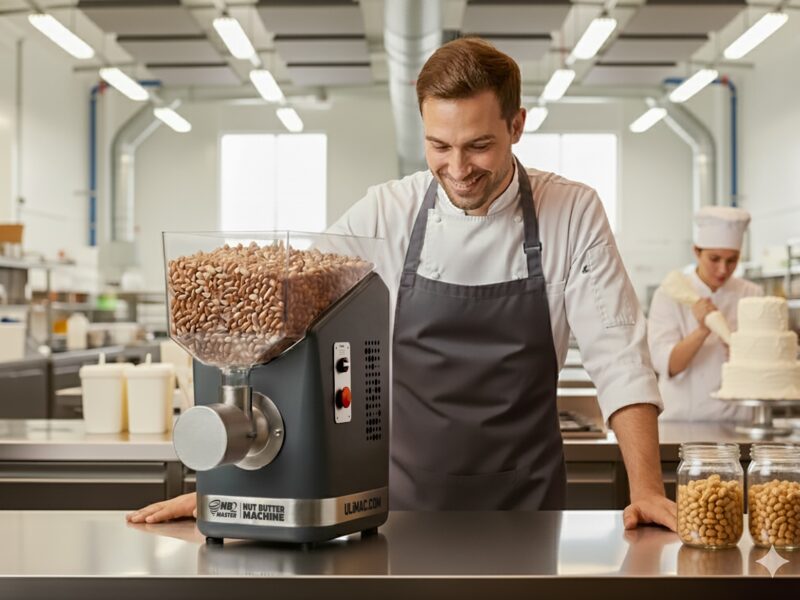
Peanut butter is made by roasting shelled peanuts, cooling them, removing their thin skins and grinding the kernels into a paste. In a plate grinder, the peanuts are crushed between grinding plates, releasing their own oil and forming peanut butter.
- Peanuts provide the oil. Added oil, sugar and salt are not needed to make pure peanut butter.
- Roasting develops the flavour. Cooling and skin removal prepare the kernels for grinding.
- Grinding sets the texture. The plate gap controls how fine the paste becomes.
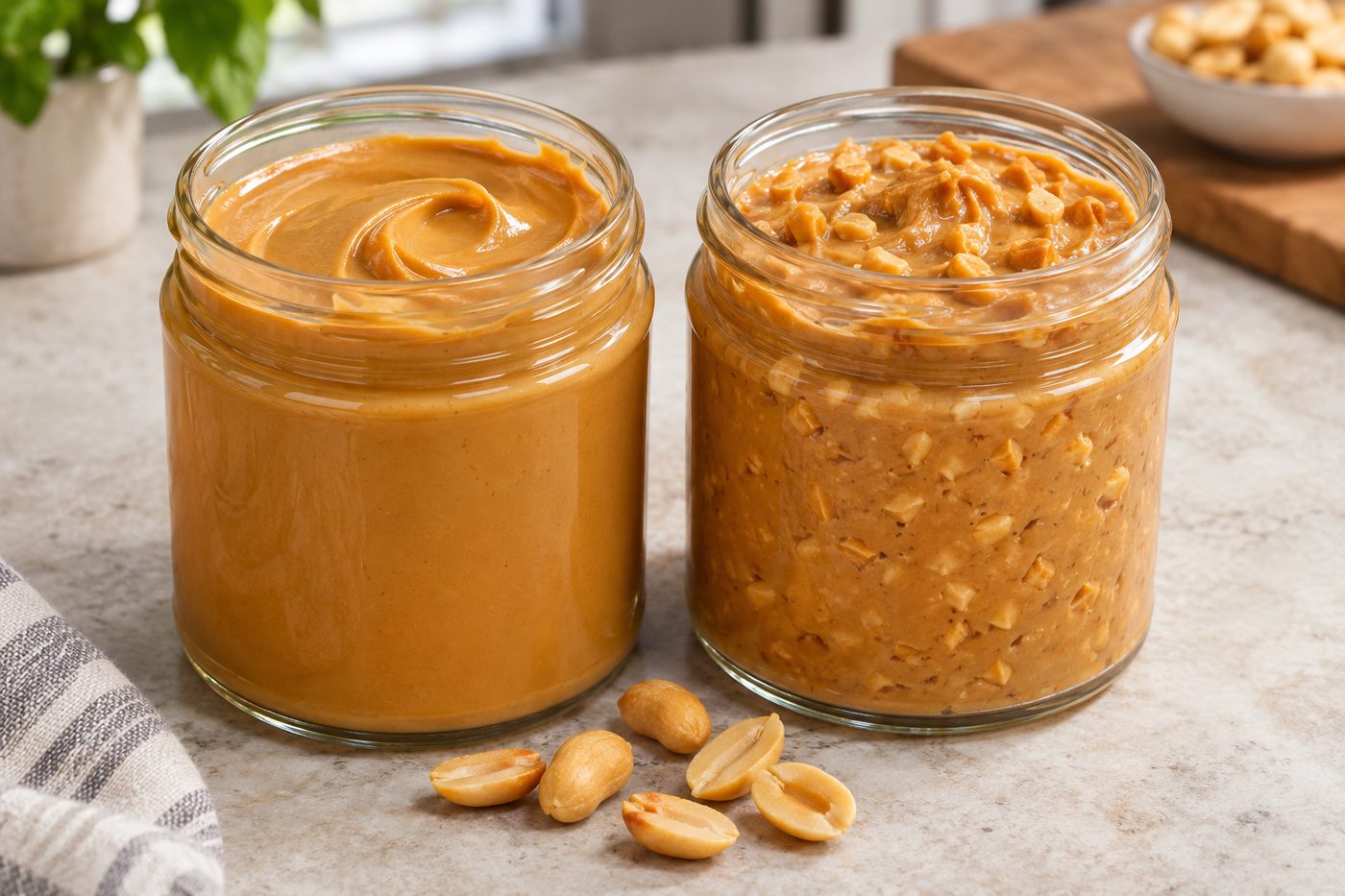
- Crunchy peanut butter has pieces. A common method is to mix chopped roasted peanuts into a smooth base.
From peanuts to peanut butter, step by step
The process starts with shelled peanuts. The hard outer shell and the thin reddish skin are different: shells are removed before roasting, while the skins can be removed afterwards. The American Peanut Council states that peanuts are roasted, blanched and sorted before grinding. Here, blanching means loosening and removing the thin skins.
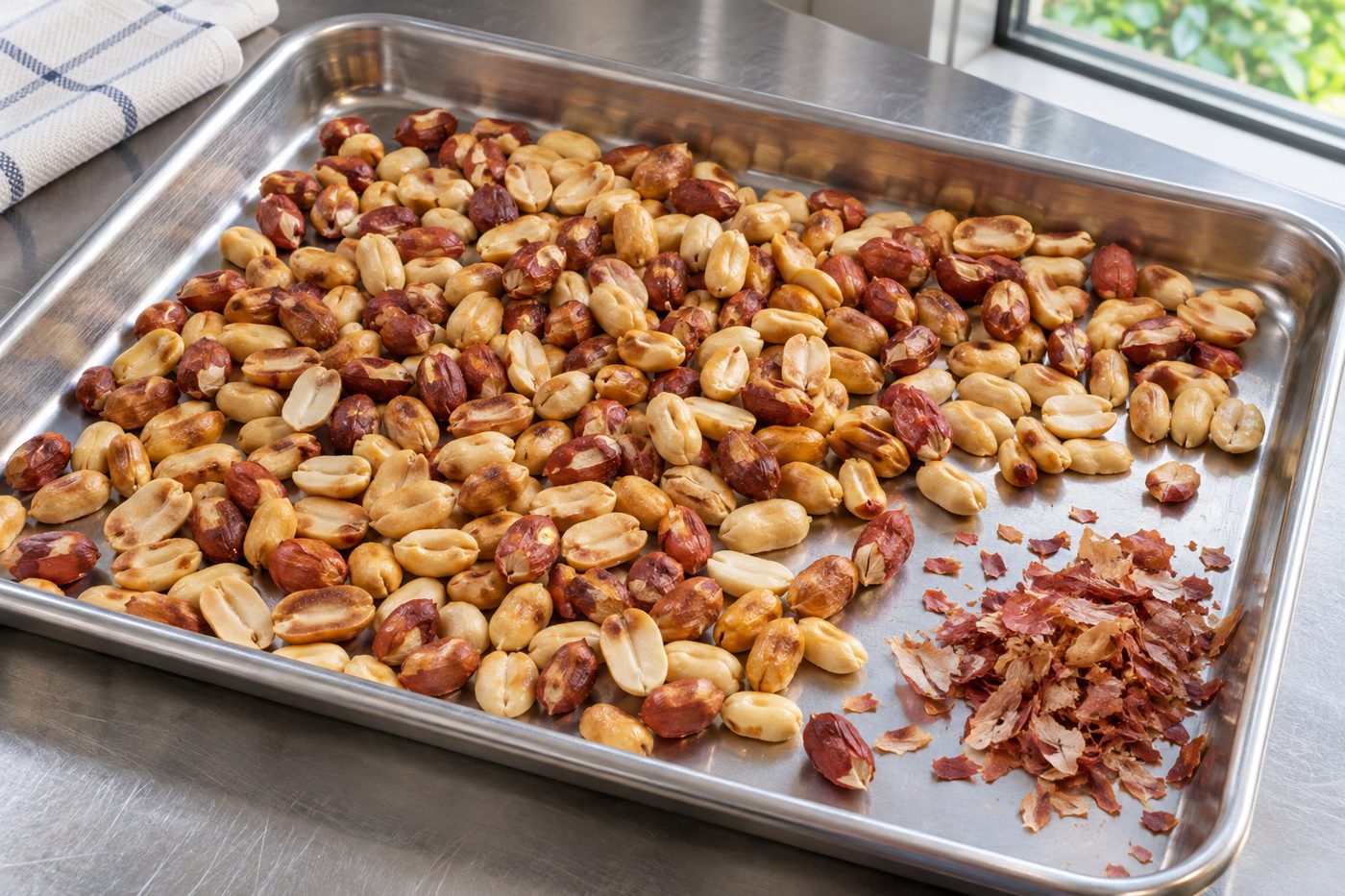
- Roast the peanuts. Roasting develops the flavour of the finished butter. Spread the kernels evenly and keep the roast consistent between batches. A lighter and a deeper roast give different flavours, so choose the result you want to serve.
- Cool the roasted kernels. Move them to a clean tray or cooling area. Let them cool before grinding. Keep prepared peanuts separate from raw ingredients and use clean containers for the next stage.
- Remove skins and sort. Loosen and separate the thin skins, then remove remaining shell fragments and damaged kernels. In peanut processing, skin removal is often called blanching; it does not always involve boiling water.
- Grind into paste. Feed the roasted peanuts into the hopper. They move into the grinding section, where the plates crush them and release their natural oil. The ground solids and oil come together, and peanut butter leaves the outlet.
- Set the texture. Adjust the plate gap for a finer or coarser paste. For crunchy peanut butter with clear pieces, prepare a smooth base and mix in chopped roasted peanuts. This gives separate control over the paste and the pieces.
- Fill and close. Collect the butter in clean, dry food containers or fill prepared jars. Keep the rims clean, fit the lids and identify the batch. For products you sell, use the storage and shelf-life conditions established for your recipe and packaging.
How do dry peanuts turn into a smooth paste?
The oil is already inside the peanuts. Grinding breaks down the kernels and releases it. As the pieces become smaller, the mixture changes from crushed nuts into a paste. You do not need to pour in oil to make that change happen.
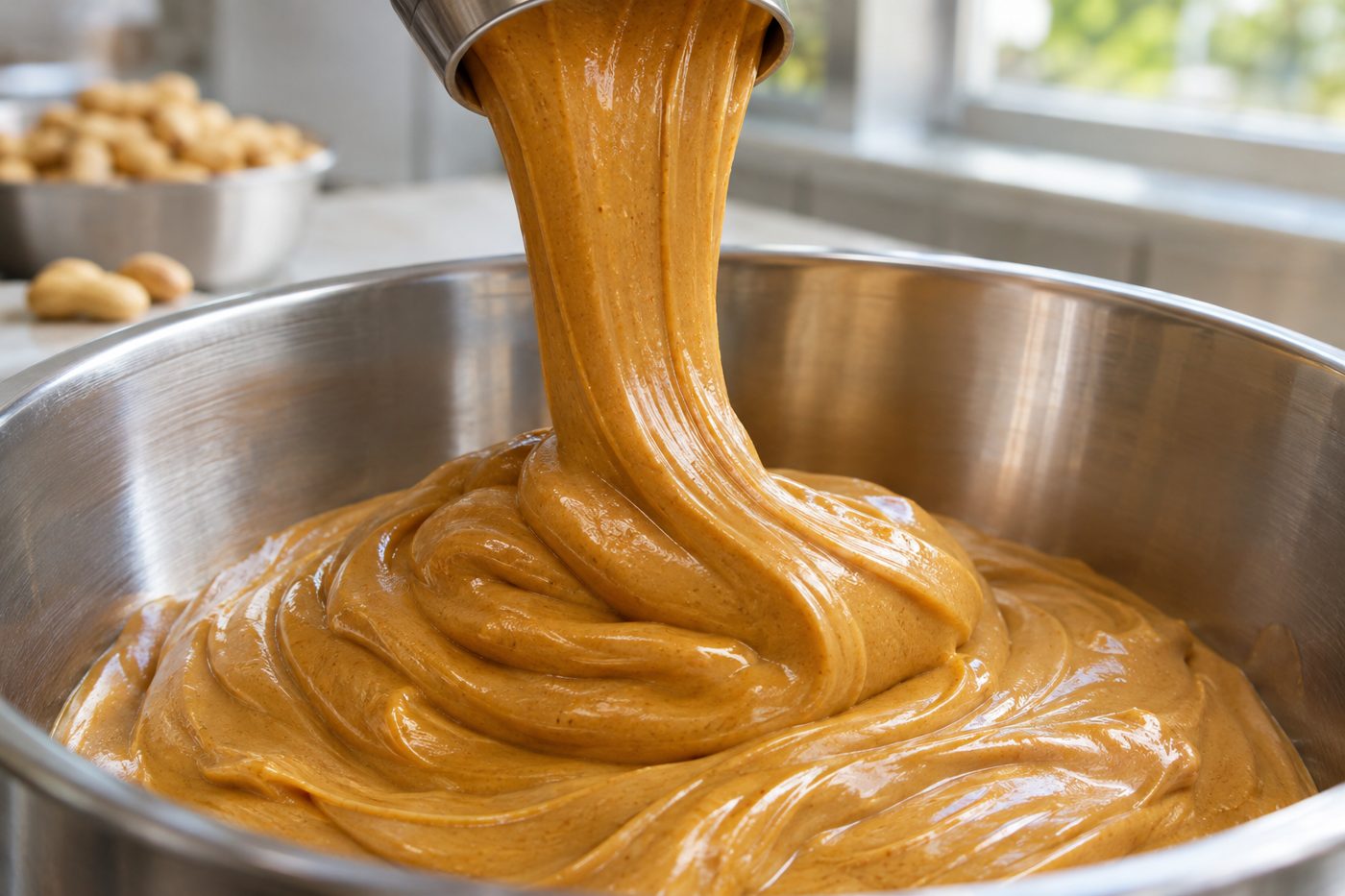
In our machines, roasted peanuts enter the grinding section from the hopper and leave the outlet as paste. The user controls the texture through the grinding plate gap. Read more about roasting and natural fat content.
Fine grinding and added ingredients do different jobs. Grinding reduces the peanut particles. Sugar changes sweetness, salt changes flavour, and stabilizers help keep the mixture together during storage.
What is added to store-bought peanut butter?
A jar can contain only peanuts, or it can include ingredients for sweetness, flavour and stability. Read the ingredient list to see which recipe you are buying.
Only peanuts
Roasted peanuts are ground into butter without added sugar, salt or oil. The oil naturally present in the peanuts forms part of the paste.
Typical supermarket jar
Depending on the recipe, the jar may also contain sweeteners, salt and stabilizing oils. Here is the ingredient list for Jif Creamy:
Made from roasted peanuts and sugar. Contains 2% or less of: molasses, fully hydrogenated vegetable oils (rapeseed and soybean), mono and diglycerides, salt.
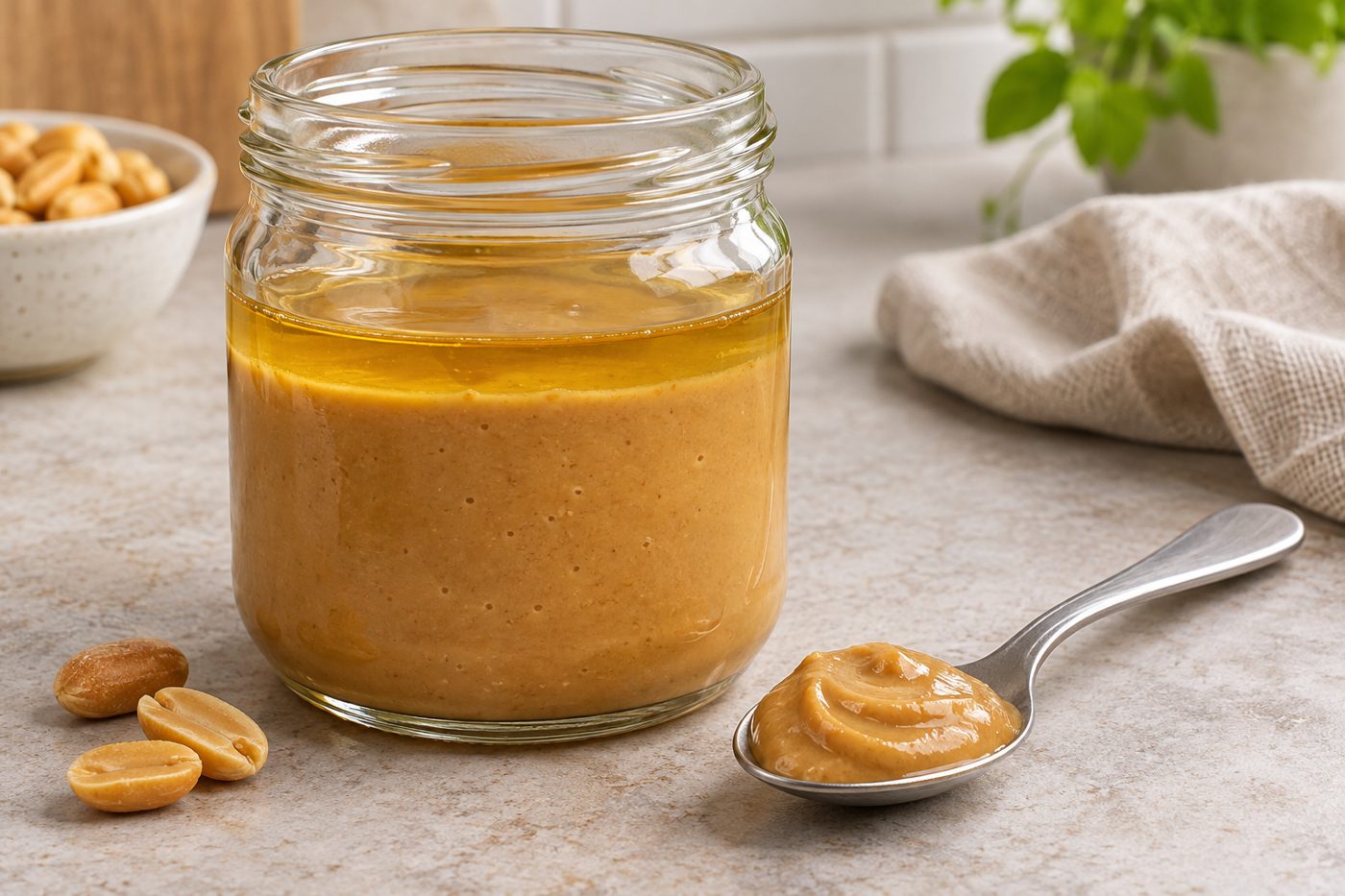
Oil can rise to the surface of peanut butter made without stabilizers. Stirring mixes it back through the paste. Manufacturers use stabilizing fats, including hydrogenated vegetable oils, to reduce this separation and keep the spread more uniform. These ingredients serve a specific purpose; they are not needed for grinding peanuts into paste.
The USDA Agricultural Research Service explains the role of hydrogenated oils in preventing peanut oil from separating.
How peanut butter is made in a small business
A small producer follows the same basic route: prepare the peanuts, grind, set the recipe and fill. Buying ready-roasted, unsalted peanuts shortens preparation. Roasting in your own kitchen gives you control over that stage.
For kitchens, behind-the-counter work and small production, our NB2 peanut butter machine processes approximately 75 kg of roasted peanuts per hour. It runs on 220–240 V single-phase power and has a fully stainless-steel body and parts.
For intensive, continuous production, we recommend the NB2 Master. Its approximate roasted-peanut capacity is 120 kg/h, with a 380 V three-phase supply. Master is also our recommended model for retail and self-service use.
Where three-phase power is unavailable, the NB2 Master X runs on 220 V single-phase power. It offers speed and torque adjustment and the same approximate roasted-peanut capacity of 120 kg/h. Both Master models have composite bodies and stainless-steel food-contact parts.
These figures describe grinding output. Plan roasting, cooling, mixing, filling and cleaning separately. Our peanut butter machine page explains the models and their uses.
Keep the next batch consistent
Record the peanut supplier and lot, the roast, the grinder setting and the finished weight. If you add salt, sugar or chopped peanuts, weigh those ingredients and keep the recipe with the batch record.
Compare samples at the same temperature. For crunchy butter, record the amount and size of the added pieces. A short record makes it easier to repeat the product your customers know.
Process reference: American Peanut Council: peanut products and processing.
Is peanut butter just peanuts?
It can be. Pure peanut butter contains only ground peanuts. Other recipes add salt, sweeteners or stabilizers. The ingredient list shows what is included.
Why does oil separate from peanut butter?
The peanuts’ natural oil can rise above the ground solids during storage. Stir it back through the butter. Stabilizers are used in some recipes to reduce separation.
How are creamy and crunchy peanut butter different?
Creamy peanut butter has a fine, smooth base. Crunchy versions contain larger pieces. Mixing chopped roasted peanuts into smooth butter is a common way to make crunchy peanut butter.
Can peanut butter be made from raw peanuts?
Raw peanuts can be ground into paste, but the flavour differs from roasted peanut butter. Our NB2 range uses roasted nuts. Prepare roasted peanuts for the process described here.
Make peanut butter in your own kitchen
We manufacture Ulimac machines in Ankara and provide a two-year warranty. Send us your planned production, country and electricity supply.
Recent Comments