

A nut butter machine is equipment that grinds nuts or oil-rich seeds into a spreadable paste using their naturally occurring oil. Commercial machines work continuously or in batches, depending on the grinding method and production setup.
- Nut butter is a product, not one machine design. Plates, rollers, blades, rotor-stator systems and grinding balls can all play a role in making nut pastes.
- The nuts provide the oil. Grinding releases it and spreads the solid particles through it.
- Choose the process for the product. A fresh spread, a fine pastry paste and a formulated filling can need different equipment.
- Ulimac machines use grinding plates. Roasted nuts enter the hopper and paste leaves through an outlet.
How does nut butter form?
Nuts contain oil inside their cells. Grinding breaks down the tissue and releases that oil. The solid particles become dispersed through the oil, turning the crushed nuts into paste.
Finer particles generally give a smoother feel. The particle size, available oil and recipe together affect how the paste flows. A paste with sugar or other ingredients can behave differently from pure ground nuts.
Natural peanut butter can be made from peanuts alone. The oil comes from the peanuts themselves, rather than being added to turn a dry powder into a spread. During storage, some of that oil can rise to the surface and be stirred back into the paste.
Grinding also produces heat. Temperature therefore matters when comparing samples and repeating a batch. Compare finished pastes at the same temperature rather than judging one warm and another cold.
Types of nut grinders for making nut butter
The following categories describe different working methods. Some machines turn prepared nuts directly into paste. Others refine a paste made in an earlier stage. A production line can combine more than one method.
Plate or disc grinder
A plate grinder crushes material between grinding surfaces. Depending on the design, these may be stone-type abrasive plates or metal discs. Hopper-fed models move nuts through the grinding section and discharge paste through an outlet.
A plate-based peanut butter maker uses this process for roasted peanuts. The term peanut grinder is broader: it can also describe equipment that produces chopped peanuts or meal, so the intended output matters.
The plate gap controls the grind. This arrangement suits fresh nut butter production where prepared nuts are fed in and paste is collected as the machine works. It is used in shops, kitchens and production areas. Ulimac machines belong to this category.
Stone grinder or melanger
A melanger is a batch grinder that repeatedly works material between stone rollers and a grinding surface, commonly inside a rotating bowl. The same batch passes under the rollers repeatedly, so mixing and grinding continue within the bowl.
A stone grinder for nut butter suits producers who want extended batch refining and a fine texture. Suitable models are used for nut pastes, chocolate and sesame paste, also called tahini. The batch stays in the machine until the desired result is reached, rather than leaving immediately through an outlet.
Colloid mill
A colloid mill is a grinder that uses a moving rotor and a stationary stator to break down particles and disperse them. Material passes through a narrow gap between these parts, where strong shearing forces act on it.
It can work in a continuous line or recirculate material from a batch tank. Fine-paste production often includes a coarse grinding stage first, depending on the mill’s feed requirements. Colloid mills suit food producers who need controlled fine grinding within a processing line.
Food processor or bowl cutter
A food processor uses blades in a bowl to chop and process a batch. The material stays in the bowl until it is removed. A suitable model can take nuts from chopped pieces to paste.
This approach fits home use, recipe development and small kitchen batches. Professional bowl cutters also serve commercial production. The texture depends on the equipment, load and processing, rather than an adjustable gap between grinding plates.
Ball mill or refiner
A ball mill refines material through moving grinding balls inside a chamber. For nut products, it commonly receives a prepared paste or mixture rather than whole nuts directly.
Systems can operate in batches, by recirculation or as part of a continuous line. They suit fine refining for industrial nut pastes, sweet spreads and fillings. Grinding the nuts and refining the finished mixture may be separate stages.
Nut butter machine types compared
Which nuts and products are involved?
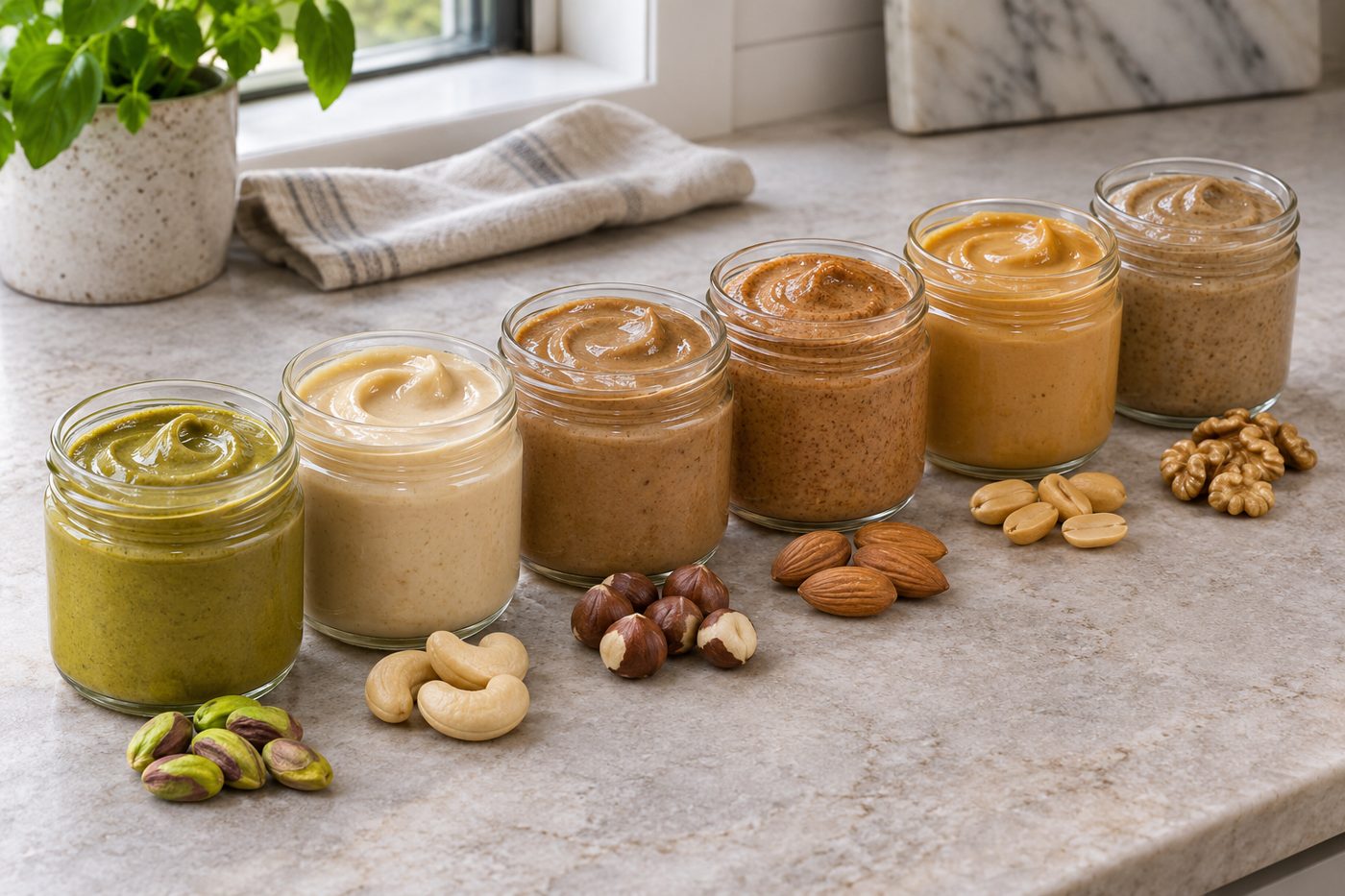
The ingredient and the finished recipe are separate choices. Hazelnut butter can be a plain spread, while hazelnut paste can serve as an ingredient in pastry or confectionery. Read the recipe or ingredient list: the product name alone does not tell you whether sugar or other ingredients have been added.
Ulimac machines also make walnut butter and pecan butter.
Our machines also process nut blends for mixed nut butter. Define the blend by weight. Preparing the individual pastes and then mixing them gives separate control over each ingredient and the final recipe.
Where Ulimac machines fit
We build plate-based commercial nut butter machines. Roasted nuts move from the hopper into the grinding section. The plates crush them, their oil is released, and paste leaves the outlet. The user adjusts the plate gap to control texture.
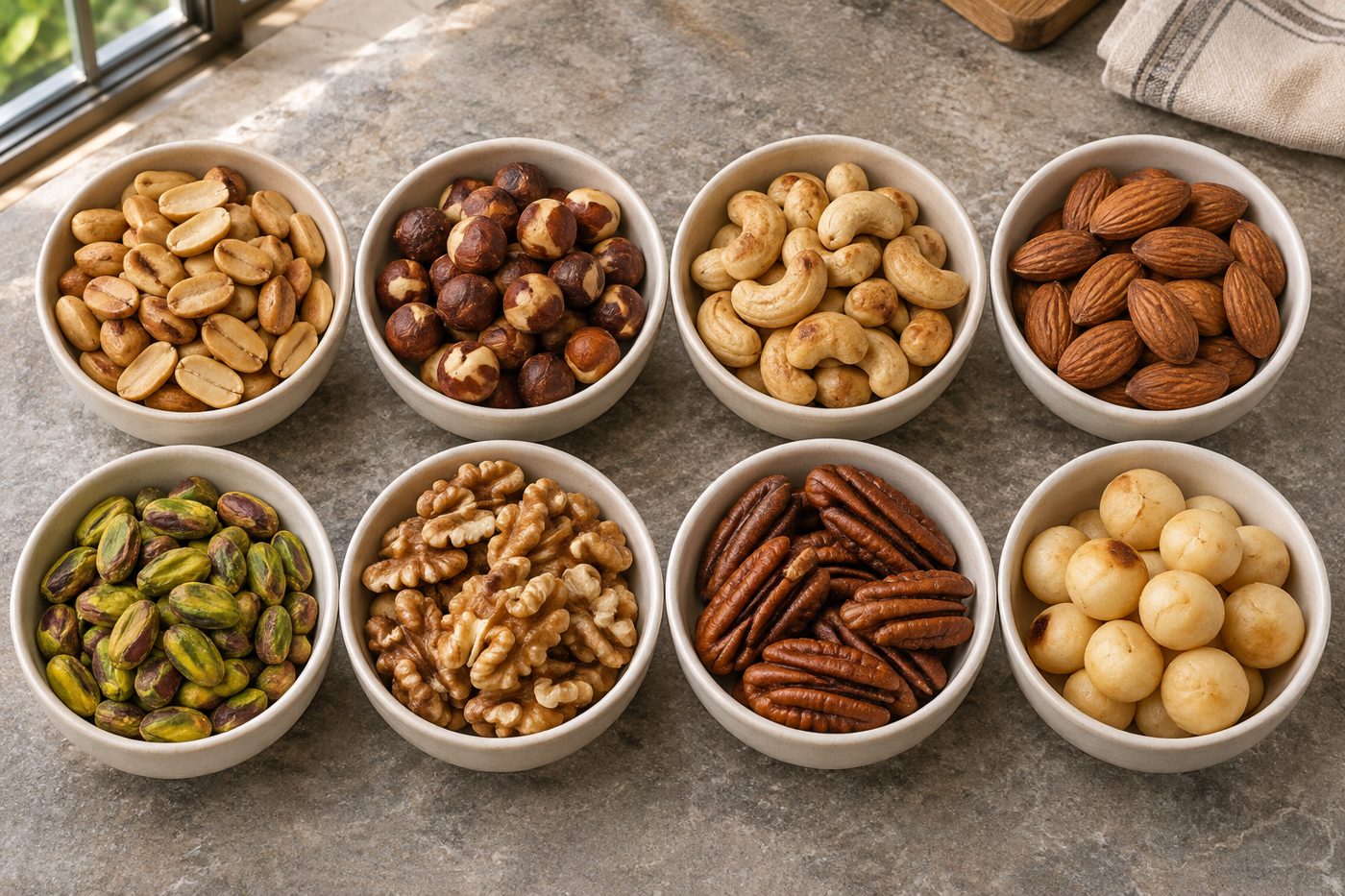
Our NB range processes roasted peanuts, hazelnuts, cashews, almonds, pistachios, walnuts and pecans. To make cashew butter with Ulimac, feed prepared roasted cashews into NB2, NB2 Master or NB2 Master X and collect the paste at the outlet.
For pistachio butter, grind roasted pistachios with NB2 Master; our guide to pistachio paste for gelato and pastry covers preparation and use in recipes.
For almond butter, we also recommend Master. Master X is the option for these harder nuts where three-phase power is unavailable.
These capacities describe grinding roasted peanuts, not a complete production line. Preparation, mixing, filling and cleaning take place separately.
NB2 is fully stainless steel. Master and Master X have composite bodies that absorb noise and vibration, with stainless-steel food-contact parts. See our peanut butter machine page for peanut-focused applications.
How to choose a nut butter machine
- Start with the product. Decide whether you need pure paste, a fresh spread or a mixture refined with other ingredients. Then choose batch production or an ongoing feed-and-collect process.
- Define the texture. Judge the paste in the finished food. A toast spread and a smooth confectionery filling may need different results. For crunchy peanut butter, chopped roasted peanuts can be mixed into a smooth base.
- Plan the whole workload. Include nut preparation, grinding, mixing, filling and cleaning. Match the equipment to your daily routine, not only its grinding output.
- Match the electricity. Choose a model that works with the supply at your site. For our range, Master serves continuous production; Master X is the option without three-phase power.
- Plan cleaning between products. Include access to food-contact parts, product removal and allergen cleaning in the workflow.
For a fuller buying guide, read How to Choose a Commercial Nut Butter Grinder. For the steps around grinding, see How Is Peanut Butter Made?
Is a nut butter machine the same as a colloid mill?
No. Nut butter machine describes an application. A colloid mill is one grinding method used for that application. Plate grinders, melangers, cutters and refiners can also make or refine nut pastes.
Is a nut grinder the same as a nut butter machine?
Not always. A household nut grinder or chopper may only produce pieces or powder. A nut butter machine is designed to produce paste. Some equipment can do both, so compare the intended output rather than the name alone.
Do you need to add oil to make nut butter?
Pure nut butter can be made using the nuts’ own oil. Our machines process roasted nuts without added oil, sugar or salt. Added ingredients belong to the recipe you choose.
Which Ulimac machine is recommended for almonds and pistachios?
We recommend NB2 Master for roasted almonds, pistachios and continuous production. Where three-phase power is unavailable, choose NB2 Master X.
Choose a machine for your nut butter production
We manufacture Ulimac machines in Ankara and provide a two-year warranty. Send us your ingredients, planned production and electricity supply.
Recent Comments